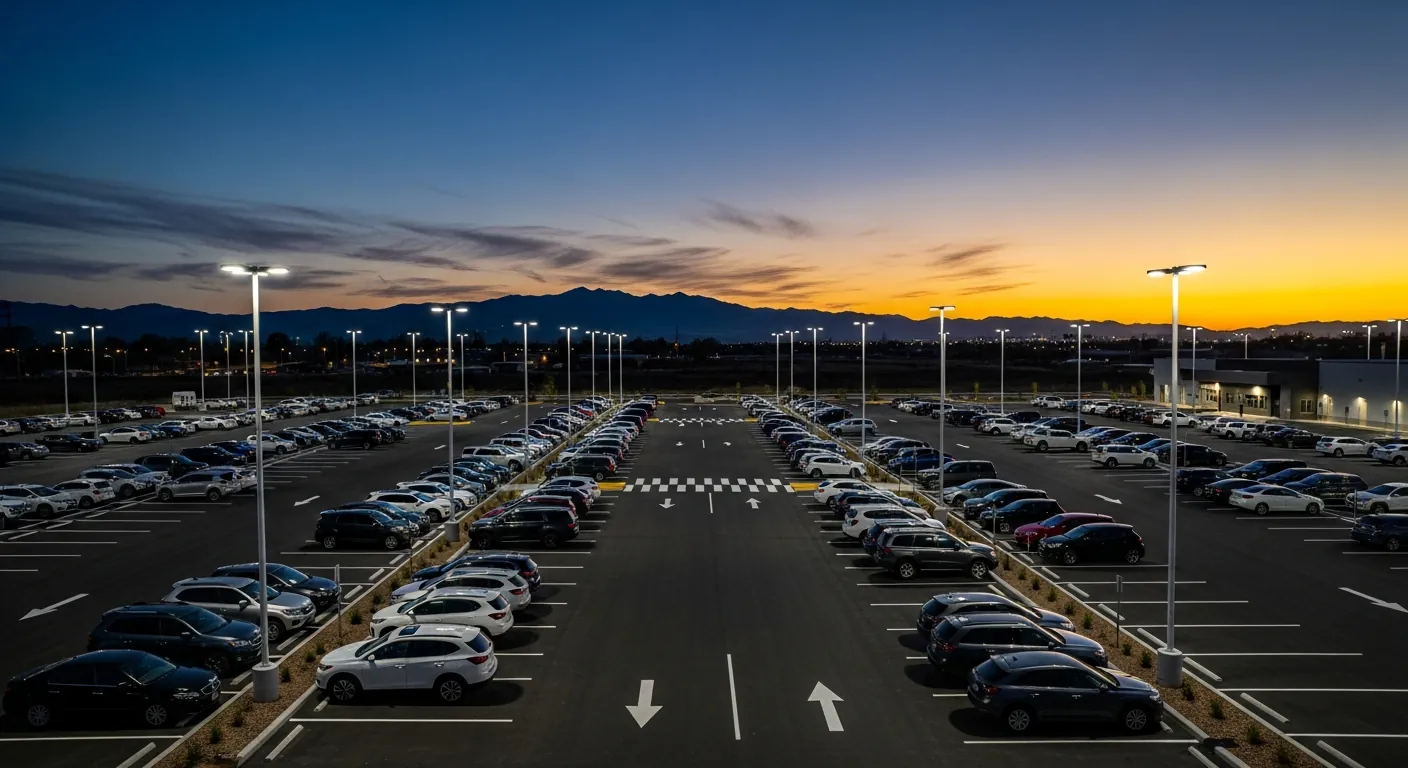
Most parking conversations start with the wrong question. Owners ask "who can run my lot?" when the better question is "who can engineer the asset to its full revenue potential?" The difference is the difference between a vendor and an infrastructure operator. A vendor inherits the layout, the rates, and the ingress chokepoints you have today; an operator redesigns them. Wins Parking is the operator. Every Design, Build, and Manage capability we run is owned in-house, which means a single accountable team carries the asset from feasibility study through opening night and into the long tail of yield optimization.
That model matters because parking is no longer a real-estate side dish. It is a digitally-instrumented revenue product. A modern surface lot generates pricing telemetry every fifteen minutes, ingress data every transaction, citation-fairness scores every shift, and EV-charger utilization every cycle. A garage adds elevator-cab telemetry, structural-load reads, and integrated transient-vs-monthly mix. None of that data improves anything until somebody operates it. The operating teams that win in this market are the ones who have engineering, software, and field ops sitting at the same table — which is exactly how we are organized.
When an owner engages us, the work starts with a diagnostic. We benchmark current revenue per stall against comparable assets in the market, review the competing parking supply nearby, and walk every entry lane to see where cars slow down. The output is a feasibility memo with three operating scenarios — light-touch (rates and tech only), full management (we take over operations), and build-and-operate (we recapitalize and modernize the physical asset). Most owners pick option two or three, and the contract is structured so we share in the upside instead of charging a fee for showing up.
Over the long run, the asset's economics improve. Once the cost of LPR, mobile pay, dynamic pricing, EV charging and reporting is paid off, each additional parked car adds more to the margin. This is where one-off contracts fall behind long-term operating relationships, because each new technology layer builds on the layers already in place and every season of demand data sharpens pricing and staffing. None of this is special to a particular property type — apartment, hospital, airport, stadium, or downtown lot, the pattern is the same.
Geography matters too. Wins Parking is headquartered in the Rocky Mountain West and we operate across all 50 states, with a particular density of expertise in mountain-resort, airport-adjacent, and entertainment-district assets. The teams that built our pricing models for ski-town surge hours are the same teams operating airport-adjacent lots, so the operator running your property already knows how to adjust prices quickly without losing customers. The operating discipline travels.
If you are evaluating a parking partner, the diligence questions worth asking are uniform: do they own their LPR firmware or rent it; do they own their mobile-pay stack or white-label it; can they show you a real revenue lift in a comparable asset of yours; and will they invest capital alongside you in modernization. Wins Parking is built so the answer to each of those is yes. That is the integrated parking infrastructure operator difference, and it is the reason most of our growth comes from existing owners adding additional properties rather than from new logos. Reach out to start with the diagnostic — it is free, it is non-binding, and it will show what your asset could earn under professional management.